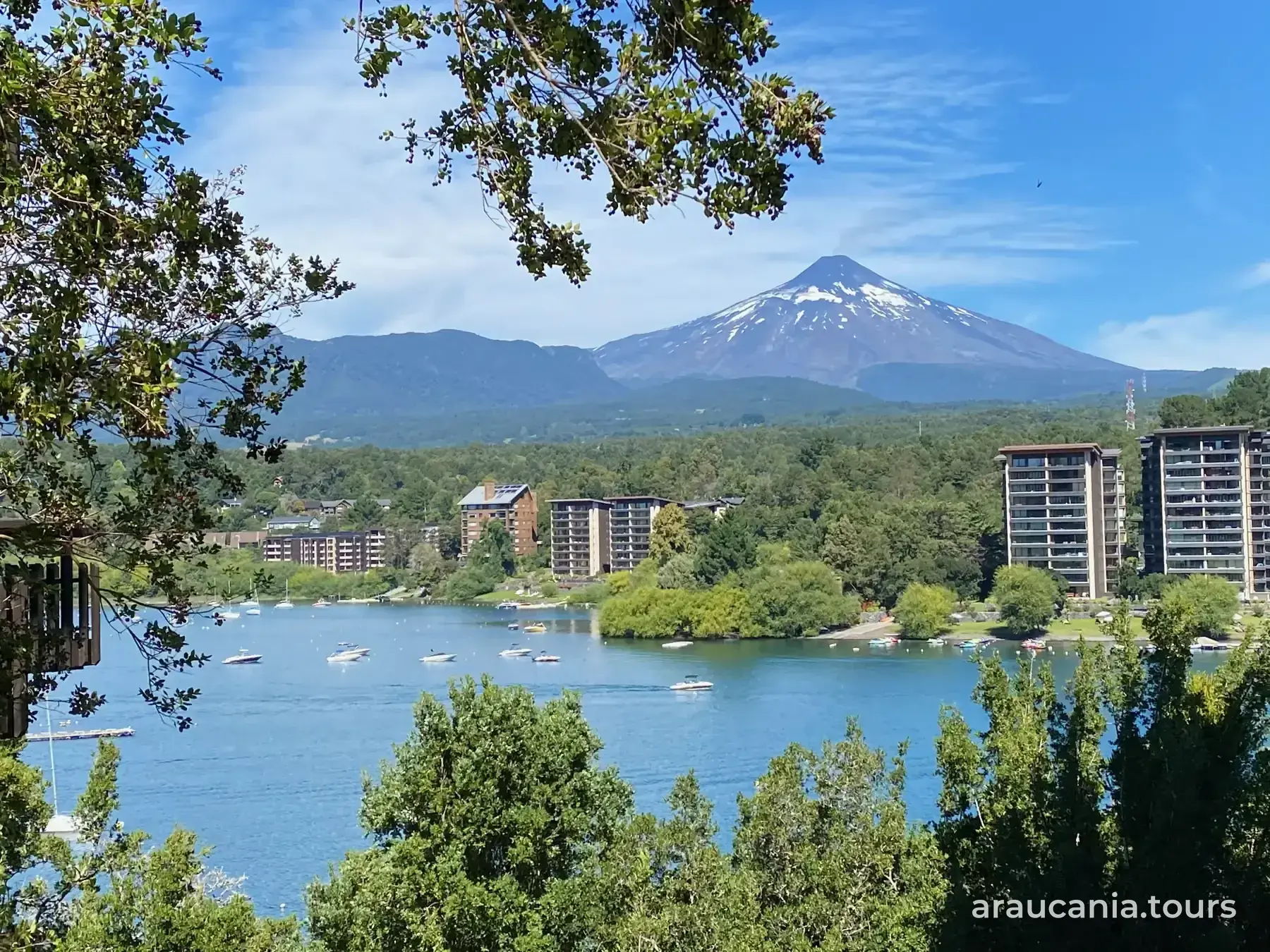

Climbing Villarrica volcano: status, requirements and safety
In short
As of October 15, 2026, Villarrica volcano remains on yellow technical alert, in force since September 4 (Sernageomin), and the protocol that reopened climbs in 2024 only applies under a green alert with no safety perimeter (Government of Chile, quoted by Cooperativa, Nov 2024). We found no later official notice authorizing climbs, so do not plan to climb while the yellow alert lasts, and check with CONAF. Under a green alert, the climb requires a certified guide or proven experience, registration with CONAF and a pass from pasesparques.cl.
Villarrica Volcano stands 2,847 meters high, and climbing it is a high-mountain activity (source: Sernatur, chile.travel, January 7, 2026). Here is whether you can climb now and what is required.
Can you climb now? Status as of October 15, 2026
- Yellow alert: Sernageomin, Chile's geology service, raised the technical alert from green to yellow on September 4, 2026, due to minor explosions and glow, consistent with the lava lake rising, and does not rule out episodes of similar or greater energy, limited to the crater area (source: Sernageomin, September 4, 2026). On September 28 its alerts page still showed yellow (source: Sernageomin, "Alertas volcánicas").
- Senapred: Chile's disaster agency declared a preventive early alert for Villarrica, Pucón and Curarrehue, and Panguipulli in Los Ríos (same source).
- Restricted radius: the September 4 statement sets no radius; Sernageomin says it will map hazard zones once it has more data (same source). We found no perimeter published since.
- Climbs: the climbing protocol only applies while the alert is green and there is no safety perimeter (source: Government of Chile, quoted by Cooperativa, November 18, 2024). We found no official notice issued after September 4 saying whether climbs continue or were suspended. Under that rule, do not plan the climb while the yellow alert lasts, and check with CONAF (parque.villarrica@conaf.cl) before paying for anything.
How this rule came about
- With the yellow alert of November 2022, climbing within 500 m of the crater was banned (source: Pucón Municipality, November 9, 2022).
- In October 2024, CONAF caught a group of tourists climbing inside the 1 km exclusion perimeter, and fines were requested (source: Pucón Municipality, October 4, 2024).
- Climbs resumed on November 22, 2024 after two years closed, under a Presidential Delegation resolution of November 14 (source: BioBioChile, November 23, 2024), and on January 21, 2025 Senapred lifted the 500 m perimeter (source: Megatiempo, January 22, 2025).
Requirements when the climb is open
- Guide: Sernatur says hiring a certified guide in advance is mandatory (source: chile.travel, January 7, 2026). To climb on your own, Pases Parques requires a Chilean Mountaineering Federation (FEACH) card or documents proving experience, plus full gear; otherwise, only with accredited agencies (source: pasesparques.cl, checked October 15, 2026).
- Rules: set by the Pucón Municipal Ordinance and the Presidential Delegation's climbing protocol (same source).
- CONAF registration: in the Rucapillán sector you must stop at the CONAF booth and register your visit (source: CONAF). When climbs reopened, climbers also had to sign a risk acknowledgment (source: BioBioChile, November 23, 2024) and watch a safety video (source: Megatiempo, January 22, 2025).
- Entry: buy it in advance at pasesparques.cl, under "Parque Nacional Villarrica Norte - Ascensión Volcán", which lists opening hours and the last entry time (source: pasesparques.cl). More on the park in Villarrica National Park: sectors and how to get there.
- Age: minors cannot climb (source: El Trancura, November 25, 2024).
- Gear: helmet, ice axe and crampons, usually supplied by the guides, plus thermal clothing (source: Sernatur, chile.travel, January 16, 2026), and 2 to 3 liters of water (source: Meteored, May 24, 2026).
Registered operators
A guided climb is adventure tourism, and in Chile that service must be listed in Sernatur's registry (source: Law 20,423). We don't recommend operators: check the one you choose at serviciosturisticos.sernatur.cl.
Season, duration and elevation gain
- Season: Sernatur recommends spring and summer (source: chile.travel, January 16, 2026). See Pucón weather month by month.
- Duration: the ascent takes 4 to 6 hours depending on the weather and the group (same source), and the descent another 2 to 3 hours (source: Meteored, May 24, 2026). CONAF lists the Cráter Villarrica trail as 3.3 km, about 3 hours and demanding (source: CONAF).
- Elevation gain: about 1,500 meters, with sections of up to 45° (source: Meteored, May 24, 2026).
Safety and recent accidents
- Risks listed by CONAF: rockfall from December to April and mudflows in case of an eruption (source: CONAF).
- May 2025: a 38-year-old climber died after falling and rolling about 500 meters on the way down from the crater, above 2,000 m (sources: BioBioChile and Emol, May 30, 2025).
- On Llaima: in 2026 two hikers died on Llaima volcano, and CONAF said neither group had registered beforehand (sources: Emol, May 18, 2026; T13, September 14, 2026). Always register.
No climb? What to do instead
See Hiking in Pucón: trails by level, the Pucón itinerary in 2 or 3 days and How to get to Pucón.
Information reviewed on October 15, 2026. The alert level and climbing rules change: before booking, check sernageomin.cl, senapred.cl and conaf.cl, and confirm with CONAF at Villarrica National Park.
Frequently asked questions
Can you climb Villarrica volcano now?
As of October 15, 2026, the volcano has been on yellow alert since September 4 (Sernageomin), and the climbing protocol only applies under a green alert with no perimeter (Government of Chile, via Cooperativa, Nov 2024). We found no official notice authorizing climbs, so check with CONAF before planning.
Do you need a guide to climb Villarrica?
Sernatur says yes, a certified guide booked in advance (chile.travel, Jan 2026). Pases Parques only allows climbing on your own with a FEACH card or proven experience and full gear (pasesparques.cl, Oct 2026).
How long does the Villarrica climb take?
The ascent takes 4 to 6 hours depending on the weather and the group (Sernatur, Jan 2026), and the descent 2 to 3 hours, with about 1,500 m of elevation gain (Meteored, May 2026).
Where do I buy the entry to climb Villarrica?
At pasesparques.cl, under "Parque Nacional Villarrica Norte - Ascensión Volcán"; then you register at the CONAF booth in the Rucapillán sector (pasesparques.cl; CONAF).
Sources: Sernageomin, «Sernageomin eleva alerta técnica volcánica del Villarrica de verde a amarilla» (sernageomin.cl, 4-sep-2026) y «Alertas volcánicas» (sernageomin.cl, actualizada el 28-sep-2026; sin cambios encontrados al 15-oct-2026); CONAF, «Parque Nacional Villarrica» (conaf.cl, consultado el 15-oct-2026); Pases Parques, «Parque Nacional Villarrica Norte (La Araucanía) - Ascensión Volcán» (pasesparques.cl, consultado el 15-oct-2026); Cooperativa, «Gobierno reabrirá la ruta de ascenso al volcán Villarrica tras dos años» (18-nov-2024); BioBioChile, «Reanudan ascensos a cráter de volcán Villarrica: permaneció cerrado por dos años» (23-nov-2024); El Trancura, «Retornaron los ascensos al Volcán Villarrica» (25-nov-2024); Megatiempo, «Cancelan perímetro de seguridad del volcán Villarrica» (22-ene-2025); Municipalidad de Pucón, «Volcán Villarrica aumenta su actividad y se declara alerta amarilla para las comunas de Pucón, Villarrica, Curarrehue y Panguipulli» (9-nov-2022) y «Turistas extranjeros son sorprendidos realizando cumbre en el volcán Villarrica» (4-oct-2024); Sernatur, chile.travel, «Volcán Villarrica» (actualizado el 7-ene-2026) y «Aventura entre nieve, fuego y vistas imponentes del Volcán Villarrica» (actualizado el 16-ene-2026); Meteored, «El volcán Villarrica ofrece algo único: ver lava hirviendo desde su cráter en plena actividad» (24-may-2026); BioBioChile y Emol, muerte de un excursionista en el volcán Villarrica (30-may-2025); Emol, nota sobre la muerte de una excursionista en el volcán Llaima (18-may-2026); T13, nota sobre la muerte de un turista alemán en los faldeos del volcán Llaima (14-sep-2026); Ley 20.423 del Sistema Institucional para el Desarrollo del Turismo (registro de prestadores de turismo aventura). Revisado el 15-oct-2026.